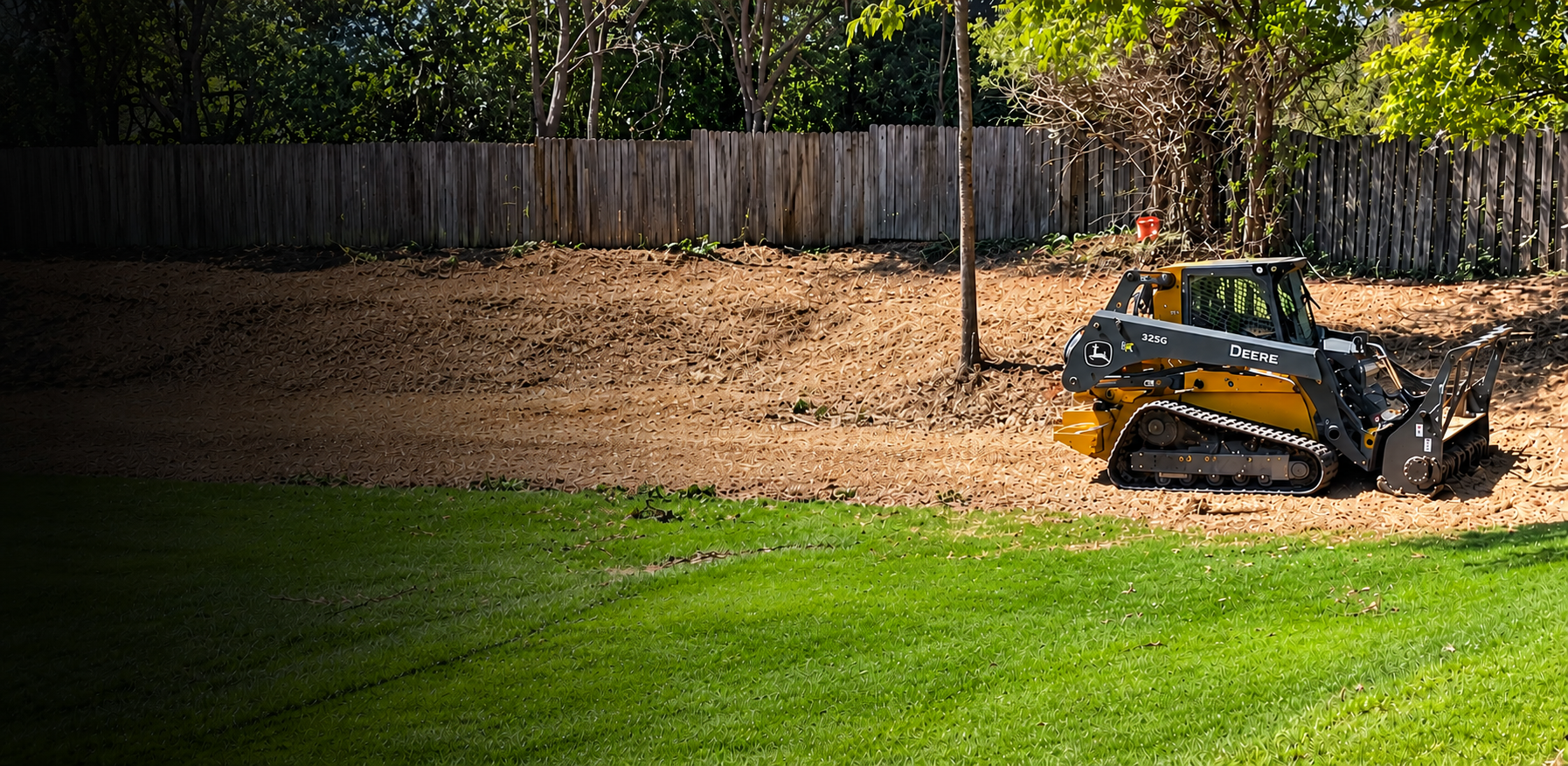



An overgrown field covered in tall grass presents different challenges than wooded acreage filled with briars, vines, and saplings. Although both forestry mulching and bush hogging help manage unwanted vegetation, they serve different purposes.
Bush hogging generally works best for tall grass and lighter brush. Forestry mulching handles denser woody vegetation, thick undergrowth, and small trees.
For property owners considering forestry mulching in South Carolina, understanding these differences can help identify the right approach for their land.
How Does Forestry Mulching Work?
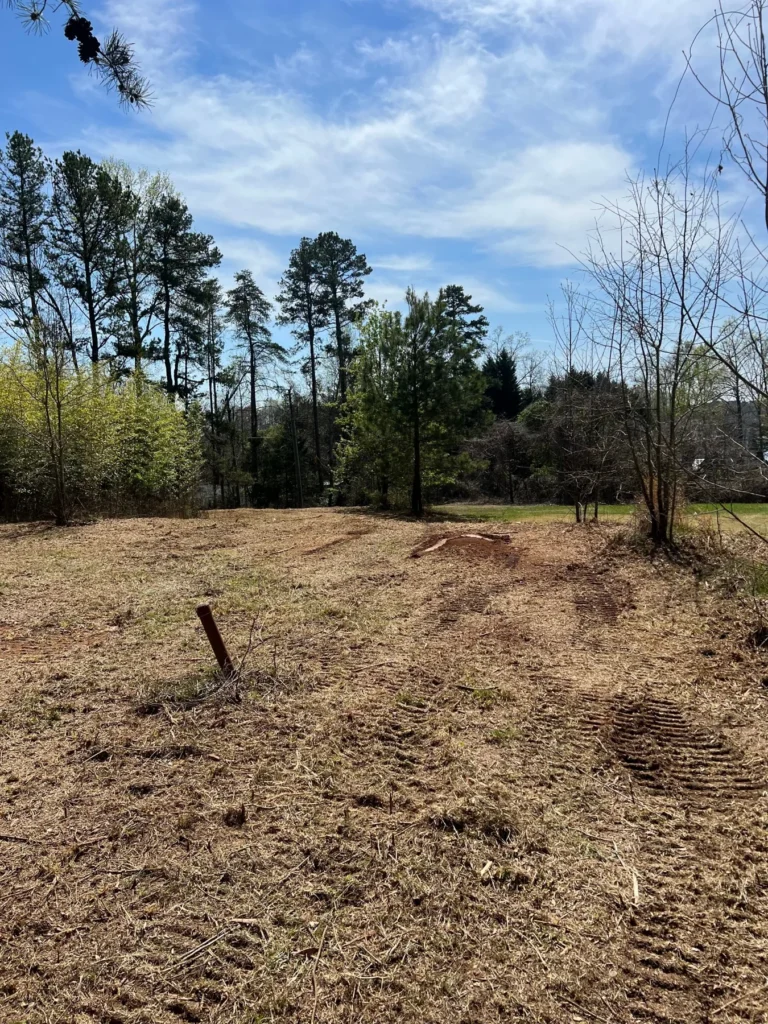
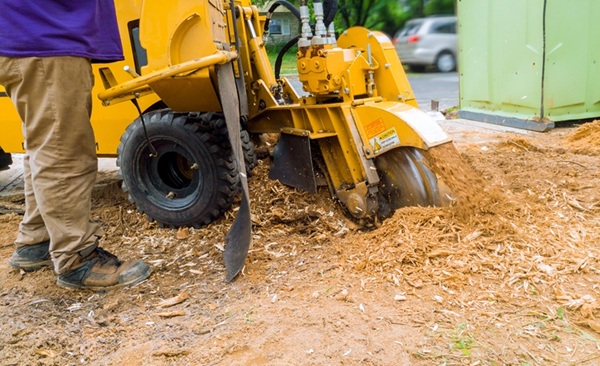
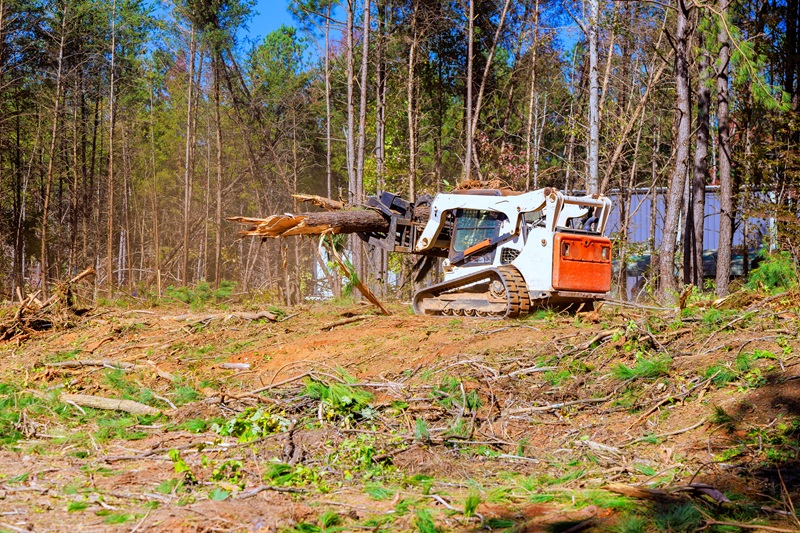
Forestry mulching uses specialized equipment to grind brush, vines, shrubs, and small trees into shredded material. A mulching attachment may be mounted on a skid steer, excavator, or another suitable machine.
The processed vegetation generally remains on the ground, reducing the need to collect and transport large piles of debris.
Forestry mulching is commonly used for:
- Clearing dense underbrush and woody vegetation
- Reclaiming overgrown fields and acreage
- Opening trails and access routes
- Maintaining fence lines
- Removing unwanted saplings
- Selectively clearing around mature trees
For a property owner trying to reclaim an overgrown section of land, forestry mulching can restore access without uprooting every plant or extensively disturbing the soil. Established trees can often remain while unwanted vegetation is reduced around them.
The USDA Forest Service describes mechanical mastication, the process of shredding woody vegetation, as a vegetation management method. Equipment selection and environmental effects vary with site conditions.
What Is Bush Hogging?
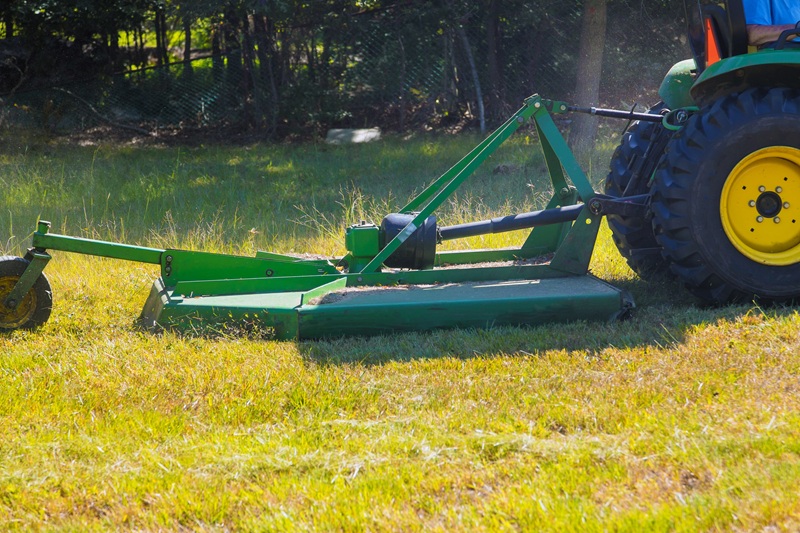
Bush hogging uses a heavy-duty rotary cutter, typically attached to a tractor, to cut grass, weeds, and light brush.
It is commonly used on pastures, fields, roadsides, and other relatively open properties where conventional lawn equipment cannot handle the vegetation.
Bush hogging is generally suitable for:
- Tall grass and weeds
- Light brush
- Small, flexible saplings within equipment limits
- Pasture maintenance
- Routine vegetation control
The rotary cutter cuts vegetation close to the ground and leaves the material behind. Unlike forestry mulching, bush hogging is not designed to process substantial woody growth or larger trees.
Hidden rocks, stumps, fallen branches, and uneven ground can also limit where rotary cutters operate safely. For a relatively open field that needs periodic maintenance, however, bush hogging may be sufficient without specialized mulching equipment.
Which Method Handles Dense Brush Better?
Forestry mulching is generally the better choice for dense brush, tangled vines, and woody saplings. Bush hogging works better for lighter vegetation across accessible, relatively open land.
An abandoned pasture covered mainly in tall grass may only need bush hogging. However, a property filled with thick briars, woody shrubs, and closely spaced saplings may require forestry mulching.
Vegetation density matters alongside stem size. Scattered shrubs may be manageable with a rotary cutter, while tightly packed woody growth can require specialized mulching equipment.
The property’s maintenance history also plays a role. Routine mowing of an established field is different from reclaiming acreage that has been unmanaged for years.
| Comparison | Forestry Mulching | Bush Hogging |
| Best vegetation | Dense brush, vines, woody saplings | Tall grass, weeds, light brush |
| Small trees | Processes suitable small trees | Very limited; depends on cutter capacity |
| Large trees | Requires separate removal | Not suitable |
| Material left behind | Shredded woody mulch | Cut grass, weeds, and brush |
| Soil disturbance | Generally limited; varies by equipment and conditions | Generally limited; varies by equipment and conditions |
| Terrain | Can maneuver around trees; slope and access limits apply | Best on accessible, relatively open ground |
| Stump and root removal | Does not remove underground roots or stumps | Does not remove underground roots or stumps |
| Primary purpose | Reclaiming overgrown land and selective clearing | Maintaining fields, pastures, and open areas |
| Ongoing maintenance | Periodic treatments may be needed | Suitable for repeated mowing where accessible |
Can Forestry Mulching Remove Trees and Stumps?
Forestry mulching can process smaller trees and saplings, but its capacity depends on the equipment, tree species, and stem diameter. Larger trees generally require conventional tree removal.
Forestry mulching does not remove underground root systems. Stumps may remain at or near ground level after the surrounding vegetation has been reduced.
This becomes important when preparing land for construction. A walking trail or recreational area may not require complete stump removal, but foundations, driveways, and underground utilities often do.
Properties intended for these improvements may need additional land clearing services to address remaining trees, stumps, and roots.
How Does Terrain Affect Equipment Selection?
The layout and condition of a property can determine whether bush hogging or forestry mulching is practical.
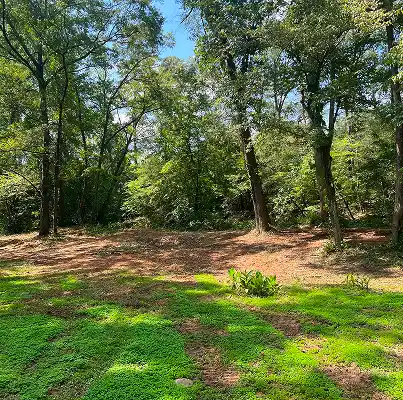
Bush hogging typically works best on relatively open ground where a tractor can move safely. Steep slopes, deep ruts, closely spaced trees, and hidden obstacles may restrict access or prevent equipment from reaching certain areas.
Forestry mulching equipment can sometimes maneuver around standing trees and handle irregular vegetation more effectively. However, tracked machines and specialized attachments still have operating limits, particularly on steep or unstable terrain.
Consider a wooded property with an overgrown trail winding between established trees. Forestry mulching may offer more flexibility than a tractor-mounted rotary cutter, provided the route accommodates the equipment.
Wet ground, restricted entrances, and surface obstacles can complicate either method. Corbin Land Management considers these conditions when assessing whether forestry mulching is suitable for a property.
Which Method Causes Less Soil Disturbance?
Both forestry mulching and bush hogging can manage vegetation without deliberately excavating the ground. However, the effects differ according to the equipment and site conditions.
Bush hogging cuts vegetation above the soil surface, generally leaving established roots intact. Forestry mulching grinds woody growth while also leaving most underground root systems in place.
Compared with clearing methods that uproot trees and move soil, forestry mulching can leave more of the existing ground surface covered. This may help reduce exposed soil and erosion risks in suitable conditions.
Neither method eliminates the possibility of soil disturbance. Heavy equipment can compact the ground, leave ruts, or damage surface vegetation, especially when operating on saturated soil.
The USDA Forest Service’s research on mechanical vegetation treatment discusses how equipment and operating conditions influence soil and vegetation outcomes.
For property owners hoping to retain established trees or avoid extensive ground disturbance, forestry mulching may offer advantages over conventional clearing. The actual impact depends on the terrain, soil moisture, and equipment used.
What Happens to Vegetation and Debris?
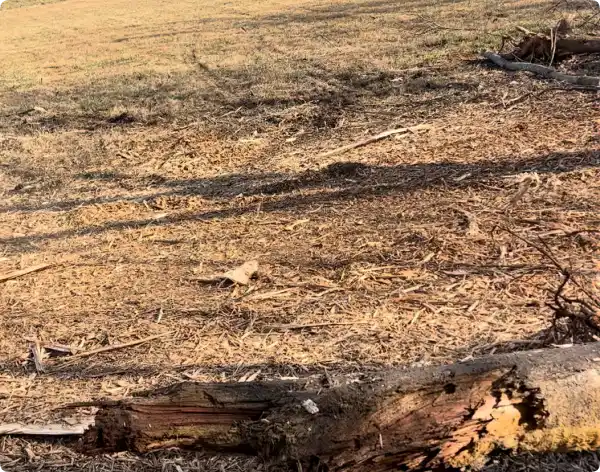
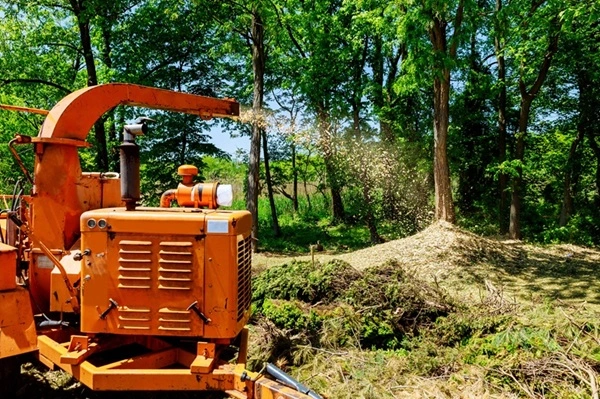
Forestry mulching grinds woody vegetation into shredded material that typically remains on the property. Bush hogging cuts grass, weeds, and lighter brush, leaving larger pieces of vegetation behind.
Neither method automatically removes the cut material. However, both can reduce the need for collecting and hauling debris compared with conventional clearing.
What remains on the ground matters when planning future improvements.
A layer of shredded wood may be acceptable along a wooded trail or property boundary. However, thick accumulations may need additional attention before planting, grading, or construction.
Similarly, heavy piles of cut grass and brush can interfere with mowing or other maintenance activities.
Forestry mulching also leaves combustible woody material on the ground. Property owners concerned about wildfire risk or vegetation management should consider how much material remains and where it accumulates.
The desired finished condition should be discussed before work begins, particularly when the property will support additional improvements.
Is Forestry Mulching More Expensive Than Bush Hogging?
Bush hogging is generally less expensive for maintaining accessible fields and lighter vegetation. Forestry mulching often costs more because it requires specialized equipment, but it can be more effective for dense woody growth.
The total cost of either method depends on:
- Acreage: Larger properties generally require more time and equipment use.
- Vegetation density: Thick brush and closely spaced saplings take more work than grass and weeds.
- Terrain: Steep slopes, ruts, and uneven ground can slow equipment.
- Accessibility: Narrow entrances and difficult access routes may complicate the project.
- Finished condition: Opening a walking trail involves different work than preparing land for construction.
- Debris management: Additional cleanup or material removal can affect the final cost.
For example, clearing five acres of tall grass may be considerably less expensive than mulching five acres of dense briars and woody saplings.
An hourly equipment rate doesn’t tell the whole story. Forestry mulching may carry a higher hourly cost, but it can accomplish work that bush hogging equipment cannot handle.
Property owners should compare the complete scope of work, including any additional clearing or cleanup needed to achieve their goals.
When Is More Extensive Land Clearing Necessary?
Forestry mulching and bush hogging can make overgrown property more accessible, but neither method prepares every site for construction.
Building a home, installing a driveway, or preparing a commercial property may require removing larger trees, stumps, roots, and other obstructions. Leaving these materials underground can interfere with foundations, utilities, and other planned improvements.
Corbin Land Management provides land clearing services for properties requiring more extensive vegetation and obstacle removal.
Some projects also need excavation, grading and leveling, or drainage improvements before construction begins.
A wooded lot intended for occasional recreation may only need selective mulching. That same property would require additional preparation if the owner later decided to build a home.
The goal is to prepare the land for its intended use, not simply remove the visible vegetation.
Which Method Is Better for Long-Term Maintenance?
Bush hogging is generally better for maintaining open fields, pasture edges, and other accessible areas with lighter vegetation. Forestry mulching is more useful when woody growth becomes too dense for routine mowing.
Neither method permanently prevents regrowth. Grass, vines, shrubs, and tree sprouts can return, particularly on properties that receive little ongoing maintenance.
Some property owners use forestry mulching to reclaim heavily overgrown land, then maintain accessible areas through periodic bush hogging.
Others may benefit from occasional selective mulching along wooded trails, property boundaries, or access routes where preserving established trees is a priority.
The most practical maintenance approach depends on how quickly vegetation returns and how the property is used.
Get Help Reclaiming Overgrown Land in Upstate South Carolina
Bush hogging can be an effective choice for grass and lighter brush. When dense vegetation, woody saplings, and tangled undergrowth make a property difficult to access, forestry mulching may be the better solution.
For properties intended for construction, additional clearing and ground preparation may also be necessary.
Corbin Land Management provides forestry mulching services, land clearing, and related property preparation throughout Inman, Spartanburg County, and the surrounding Upstate.
Clear the Land. Prepare the Ground. Build With Confidence.
Whether you need to clear an overgrown lot, prepare a building site, improve access, or reshape your property, Corbin Land Management is ready to help.
Contact