


Demolishing an old house, barn, or commercial building in Upstate South Carolina may require several approvals before work begins. Local demolition permits, utility disconnections, asbestos inspections, and debris disposal requirements can all affect the project schedule.
Demolition permits in South Carolina are generally issued by local building authorities, while separate state and federal environmental regulations may also apply. Requirements depend on the property’s location, the type of structure, and the proposed work.
For property owners considering demolition and structure removal, understanding these requirements early can help prevent delays and unexpected expenses.
When Is a Demolition Permit Required?
Most projects involving the complete removal of a building require authorization from the appropriate local building department.
However, demolition permit requirements in Upstate SC vary by municipality and county.
Local authorities may consider:
- The structure’s size, condition, and intended removal.
- Whether the property is residential or commercial.
- Existing utility connections.
- Nearby buildings and public access.
- Environmental concerns and debris disposal.
- Proposed grading or redevelopment.
Partial demolition may also require approval when structural components are affected.
Property owners should verify requirements before work begins, even when removing a small outbuilding or an unoccupied structure.
Demolition Permits in Spartanburg County
Spartanburg County maintains its own permitting procedures for properties within its jurisdiction. The Spartanburg County Building Codes Department administers building code requirements and provides demolition-related permitting information.
Residential Demolition Requirements
The county’s residential demolition permit application identifies responsibilities involving utility disconnections, debris removal, and the condition of the property after demolition. The application addresses sewer and septic connections, wells, and excavated areas that may require filling.
Spartanburg County also requires demolition work covered by these permits to be completed within 30 days. This makes advance coordination particularly important when utility providers, environmental inspections, or additional site work are involved.
Commercial demolition projects may follow different review procedures.
City of Spartanburg Requirements
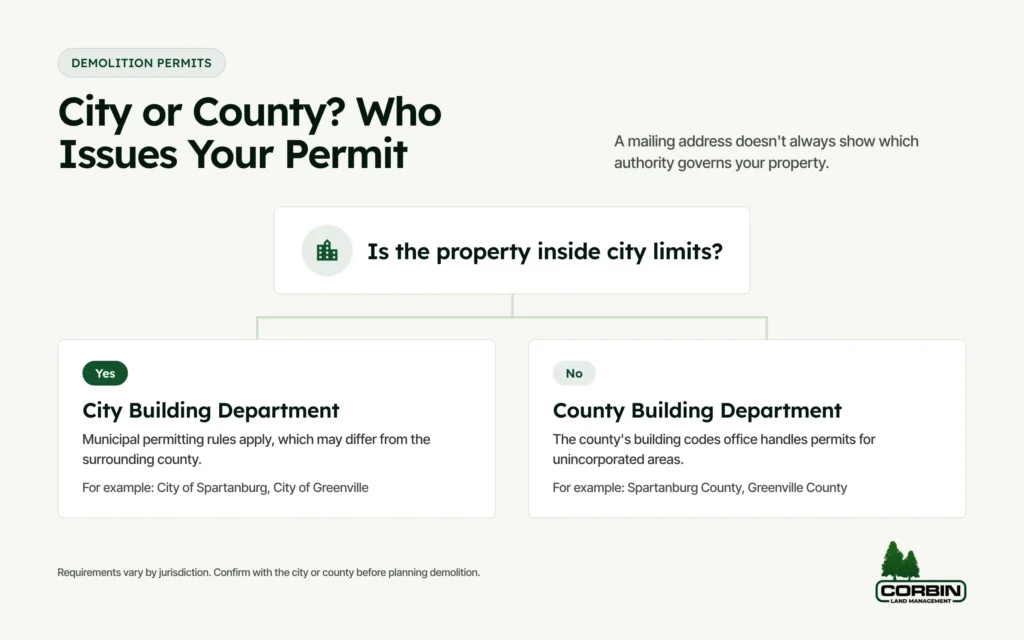
Properties inside Spartanburg city limits are subject to municipal permitting procedures rather than automatically following county requirements. The City of Spartanburg Building Inspections Department identifies demolition among its regulated permit activities.
Projects involving redevelopment or changes to the property may also require planning or site-related approvals. A property’s mailing address does not always establish its permitting jurisdiction. Confirming whether the parcel lies inside municipal boundaries helps identify the correct department.
Demolition Permits in Greenville County
Greenville County also administers building and demolition permits through its local building authority. The Greenville County Building Safety Department provides information about permit requirements for regulated construction and demolition activities.
Utility-related work, including electrical, gas, and plumbing connections, may require separate coordination or authorization.
City of Greenville Requirements
Properties inside Greenville city limits fall under municipal permitting procedures.
The City of Greenville’s building permit resources include demolition-related applications for residential and commercial structures. Depending on the project, additional review may be necessary for redevelopment, public rights-of-way, or related site improvements.
Greenville County and the City of Greenville are separate permitting jurisdictions. Property owners should confirm which authority governs their site before planning demolition. The same principle applies throughout Upstate South Carolina, where incorporated municipalities may have requirements that differ from surrounding county areas.
Residential vs. Commercial Demolition Requirements
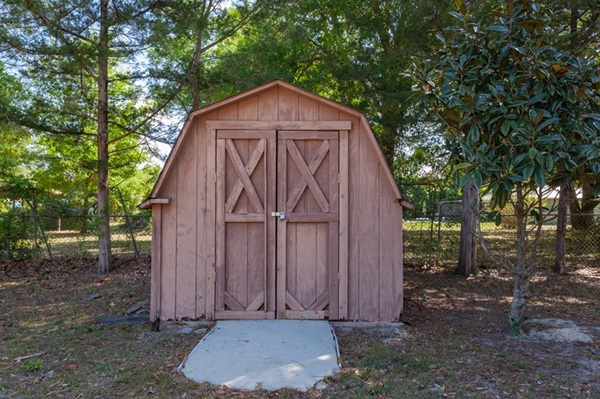
Residential demolition permits in South Carolina commonly involve houses, garages, barns, mobile homes, and other structures. Local requirements may address utility disconnections, debris removal, and the condition of the property after demolition.
Commercial demolition can involve additional review because of building size, previous occupancy, environmental conditions, or proximity to neighboring properties. Removing a former commercial building with multiple utility systems, for example, may require more extensive coordination than demolishing a detached residential garage.
One important note involves asbestos regulations. Under South Carolina’s environmental rules, private residences containing four or fewer dwelling units are generally exempt from certain asbestos-related demolition requirements. However, exemptions may not apply when the demolition is part of a larger commercial or public development, the property was previously used for nonresidential purposes, or other regulated circumstances exist.
Property owners should confirm the structure’s regulatory classification before assuming an exemption applies. Local demolition permits, utility requirements, and safe debris handling may still be necessary regardless of the building’s residential or commercial designation.
Utility Disconnections Before Demolition
Utility coordination is a significant part of demolition planning.
Structures may contain active or abandoned connections involving:
- Electricity and natural gas.
- Water and sewer service.
- Septic systems.
- Telecommunications infrastructure.
- Underground service lines.
Even an unoccupied building may have connections that have not been properly terminated.
Spartanburg County’s residential demolition application specifically addresses contacting utility providers and handling service connections. Utility disconnections can affect the project schedule because service providers may need time to complete their work.
The location of underground infrastructure may also influence how the surrounding property is cleared or restored.
Asbestos Inspections and Environmental Regulations
Older buildings may contain asbestos in insulation, flooring, roofing, siding, and other materials.
Before a regulated facility is demolished, South Carolina requires an asbestos inspection performed by a licensed asbestos building inspector. The inspection identifies materials that may need special handling or removal before demolition begins.
For regulated demolitions, the South Carolina Department of Environmental Services also requires advance notification and a demolition permit, generally at least 10 working days before work begins. This requirement applies even when the inspection finds no asbestos. If regulated asbestos-containing materials are identified, licensed abatement may be necessary before structural demolition can proceed.
Depending on the structure and circumstances, state notification and professional asbestos abatement may also be required.
How Asbestos Requirements Affect Project Timing
When regulated asbestos-containing materials are identified, appropriate removal procedures may be necessary before general demolition begins. Inspection findings, notification requirements, and abatement scheduling can affect when structural removal may proceed.
South Carolina’s asbestos program places compliance responsibilities on regulated facility owners and contractors. For property owners in Spartanburg, Greenville, and surrounding communities, asbestos review should be considered during initial project planning.
Not all demolition contractors are licensed to perform asbestos abatement. When asbestos removal is required, property owners should confirm that the work will be handled by an appropriately licensed professional.
Demolition Debris Disposal in South Carolina
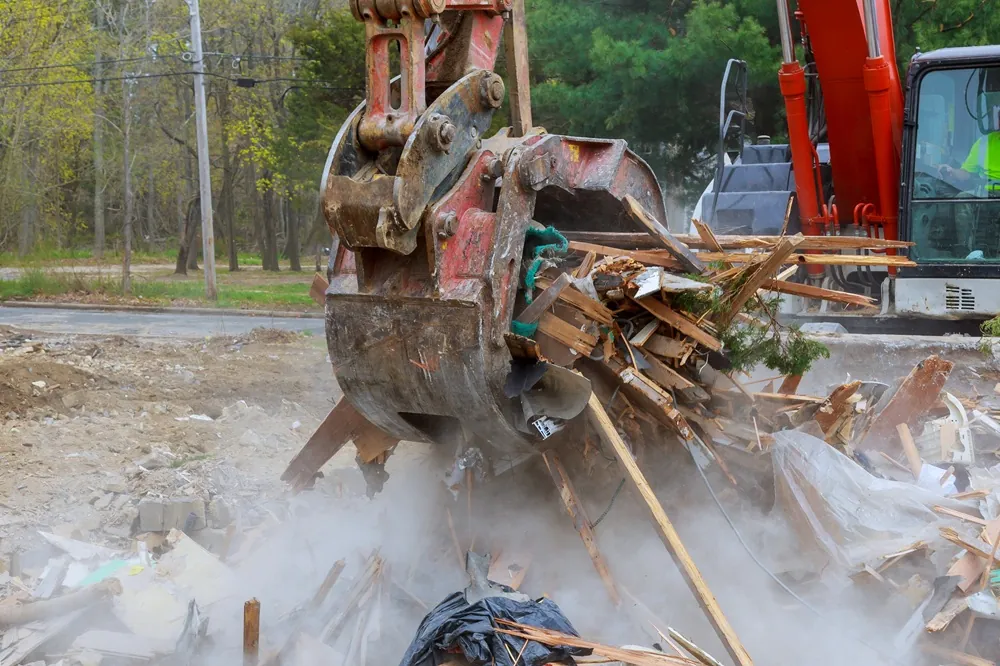
Demolition produces materials that must be handled and disposed of appropriately. Common debris includes concrete, masonry, lumber, roofing materials, metal, and other construction waste.
The South Carolina Department of Environmental Services provides guidance on construction and demolition debris management. Some materials may be recycled, while others require disposal at authorized facilities.
Regulated materials, including certain asbestos-containing waste, have additional handling requirements. Debris removal also affects project pricing. A demolition estimate should identify whether loading, hauling, disposal, and cleanup are included.
Leaving foundation material or other debris on-site may create additional work before the property can be reused.
Site Preparation After Demolition
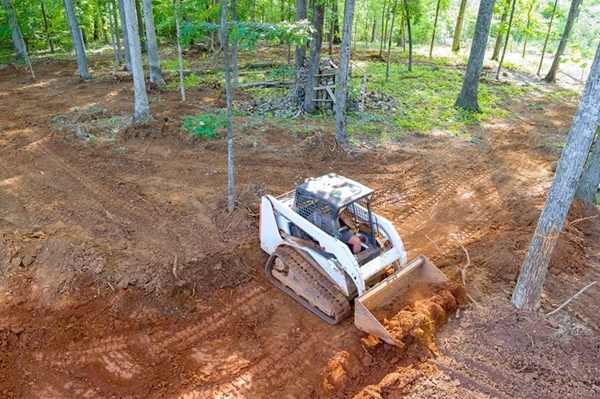
Removing a structure may leave behind concrete, debris, and uneven ground that require additional work. Depending on the property’s intended use, site preparation may involve removing foundations, hauling debris, backfilling excavated areas, and grading.
These activities can affect overall project costs and may require additional permits or approvals. Planning for site preparation before demolition begins helps determine what work is needed to make the property suitable for future construction or improvements.
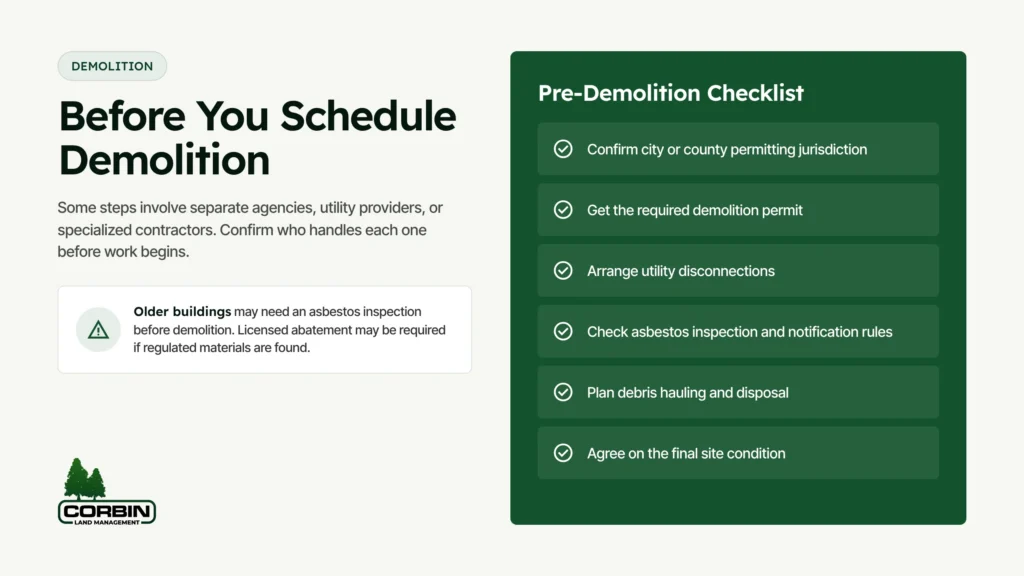
What Should You Check Before Scheduling Demolition?
Before scheduling a demolition project in Upstate South Carolina, property owners should confirm several details that may affect the work:
- Permitting jurisdiction: Determine whether the property falls within city or county limits and contact the appropriate building department.
- Demolition permit: Confirm which applications, supporting documents, inspections, and approvals are required.
- Utility disconnections: Arrange for electrical, gas, water, sewer, and other services to be properly disconnected or addressed.
- Asbestos requirements: Determine whether the structure is subject to asbestos inspection, notification, permitting, or abatement requirements.
- Debris removal: Establish how demolition materials will be loaded, transported, recycled, or disposed of.
- Final site condition: Clarify whether foundation removal, backfilling, grading, or other site preparation is included.
Some steps may involve separate agencies, utility providers, or specialized contractors. Confirming responsibilities before work begins can help prevent scheduling conflicts and unexpected costs.
Planning a Demolition Project in Upstate South Carolina
Demolition requirements depend on the structure, its location, and the work involved. Identifying the appropriate permitting authority, addressing utilities and environmental concerns, and establishing a plan for debris removal can help property owners prepare for a smoother project.
Corbin Land Management provides demolition and related land services from Inman, South Carolina, serving Spartanburg, Greenville, and surrounding Upstate communities. Whether you’re removing an aging structure or preparing property for future improvements, understanding the full scope of work is an important first step.
Contact Corbin Land Management to discuss your demolition project and request an estimate.
Clear the Land. Prepare the Ground. Build With Confidence.
Whether you need to clear an overgrown lot, prepare a building site, improve access, or reshape your property, Corbin Land Management is ready to help.
Contact