


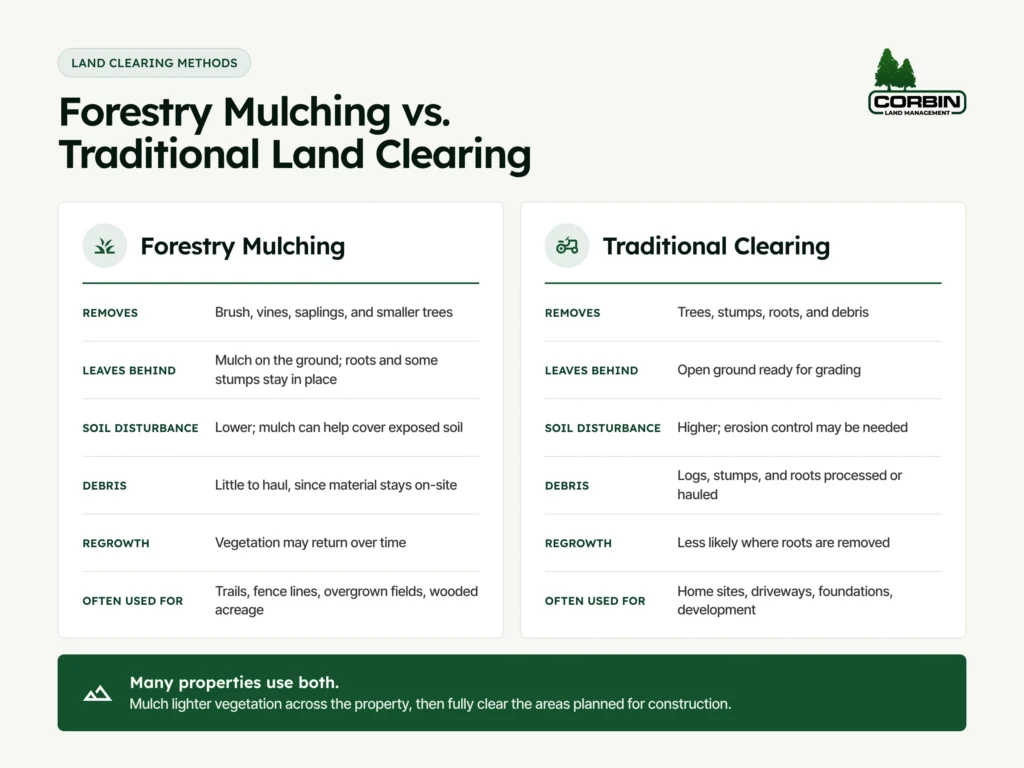
Forestry mulching and traditional land clearing both remove unwanted vegetation, but they produce different results. Forestry mulching grinds brush and smaller trees into mulch that remains on the property, while traditional clearing can remove trees, stumps, roots, and debris to prepare land for construction or other improvements.
The right approach depends on the property’s vegetation, terrain, and intended use. Forestry mulching may be more practical for managing overgrowth and opening access paths, while conventional land clearing is often necessary when underground obstacles must be removed.
Understanding how these methods compare in cost, soil disturbance, debris management, and long-term results can help property owners choose an appropriate approach. Professional forestry mulching services can also be combined with traditional clearing when different portions of a property have different requirements.
What Is Forestry Mulching?
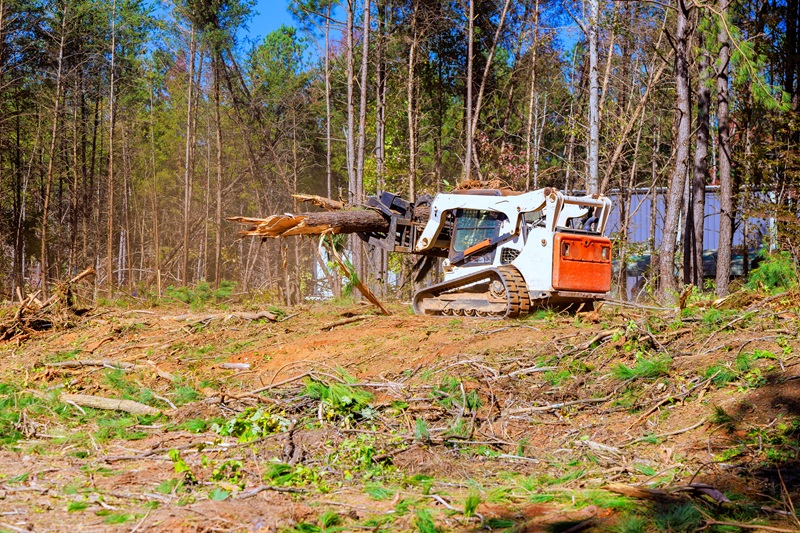
Forestry mulching uses specialized equipment to process brush, vines, saplings, and smaller trees directly where they grow.
The resulting wood chips and shredded vegetation remain on the ground, reducing the need for hauling.
Because roots generally remain intact, forestry mulching causes less soil disturbance than methods involving extensive excavation.
Common applications include:
- Opening recreational trails and access paths.
- Clearing fence lines.
- Managing dense undergrowth.
- Reclaiming overgrown fields.
- Preserving selected mature trees.
- Maintaining wooded acreage.
Forestry mulching for property clearing is particularly useful when vegetation management is the primary goal.
Because roots and some stump material remain in place, vegetation may regrow over time. Forestry mulching is best viewed as a method of managing vegetation rather than permanently preventing its return.
How Traditional Land Clearing Works
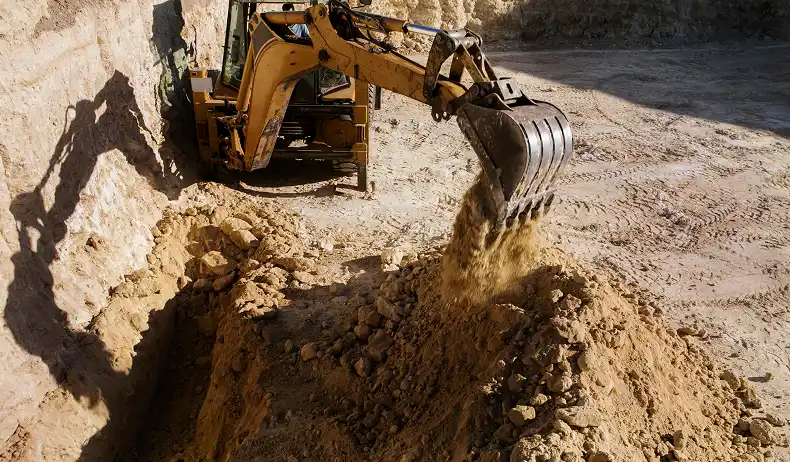
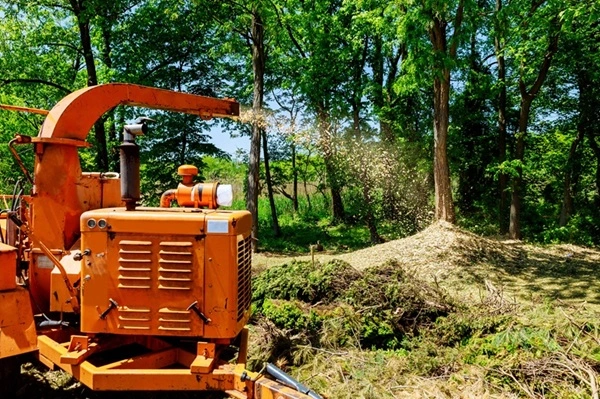
Traditional land clearing methods involve cutting, removing, and sometimes uprooting vegetation. Depending on the project, this may include tree removal, stump extraction, root removal, debris hauling, and grading. Conventional clearing is often used when the property must be prepared for foundations, driveways, agricultural development, or other improvements.
For example, a residential building site may require trees and roots to be removed from the construction area before excavation begins. Traditional clearing generally creates more debris and ground disturbance, but it can provide the conditions needed for development.
How Each Method Affects the Soil
Forestry mulching and traditional clearing affect the ground differently, particularly when it comes to soil disturbance, erosion, and vegetation regrowth.
Forestry Mulching and Soil Protection
Forestry mulching processes vegetation without routinely extracting established root systems. The resulting mulch provides ground cover that can help protect exposed soil from rainfall and erosion.
Because the process generally involves less excavation, it may preserve more of the existing ground structure than clearing methods that remove stumps and roots. However, heavy equipment can still compact soil, particularly when operating on wet or sensitive ground.
The USDA Forest Service’s research on mechanical mastication identifies terrain, equipment, vegetation conditions, and treatment methods as factors influencing soil impacts.
Mulched material can also affect how vegetation regrows and, in some environments, how surface fuels accumulate. These effects depend on site conditions and how the treated land is maintained.
Traditional Clearing and Ground Preparation
Traditional clearing can create greater soil disturbance when trees, stumps, and roots are removed. Exposed soil may be more vulnerable to erosion, especially on slopes or properties with drainage concerns.
However, this disturbance is often necessary when land must support foundations, driveways, utilities, or other improvements. Grading, drainage work, and erosion control measures may be needed to establish suitable conditions after clearing.
Neither method is automatically the better environmental choice. The appropriate approach depends on how much vegetation must be removed, the condition of the soil, and the property’s intended use.
Debris Management and Disposal
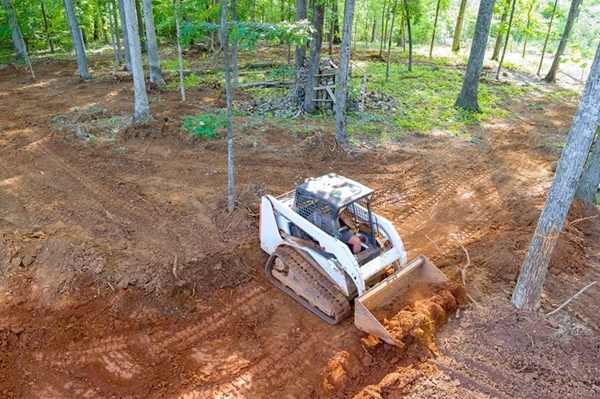
Forestry mulching generally leaves processed vegetation on-site. This reduces the hauling associated with removing brush and smaller trees. The mulch gradually decomposes, although the process varies with climate, material size, and moisture.
Traditional clearing produces logs, branches, stumps, roots, and other debris that may require processing or disposal. Hauling and disposal can add substantially to project costs. However, leaving organic material on-site is not always appropriate. Building foundations, pavement, and engineered fill areas may require vegetation and unsuitable organic material to be removed.
Is Forestry Mulching Cheaper Than Traditional Clearing?
Forestry mulching can be less expensive than traditional clearing when a project primarily involves brush, saplings, and smaller trees that can be processed on-site. Because the material generally remains on the property, mulching may reduce expenses associated with debris hauling, stump removal, and extensive excavation.
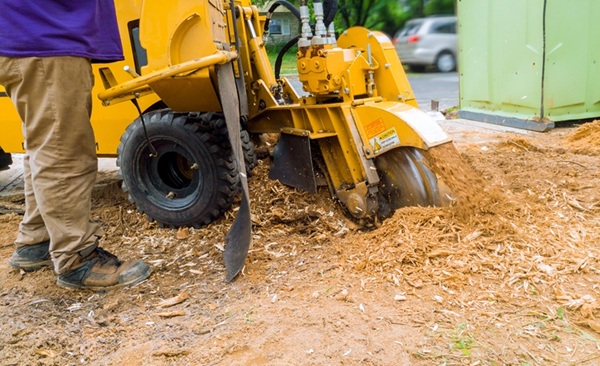
However, forestry mulching is not always the lower-cost option. If a property ultimately needs stumps removed, roots extracted, or ground prepared for construction, completing those tasks after mulching may increase the total project cost.
Pricing for either method depends on acreage, vegetation density, tree size, terrain, equipment access, and the required condition of the property after clearing.
When Forestry Mulching May Cost Less
Forestry mulching can be more economical when:
- Vegetation consists mainly of brush and smaller trees.
- Stump removal is unnecessary.
- Mulched material can remain on-site.
- The project involves trails or property maintenance.
- Extensive grading is not required.
Reducing debris hauling and avoiding unnecessary excavation can lower the overall scope of work.
When Traditional Clearing May Offer Better Value
Traditional land clearing may be more cost-effective when a property needs extensive preparation for construction. Forestry mulching alone may lead to additional expenses if stumps and roots must be removed later.
Combining both methods can be a practical option. Forestry mulching can clear lighter vegetation, while traditional clearing removes stumps and roots from areas designated for construction. This approach prepares the necessary portions of the property without disturbing areas that do not require complete clearing.
Which Method Works Best for Different Properties?
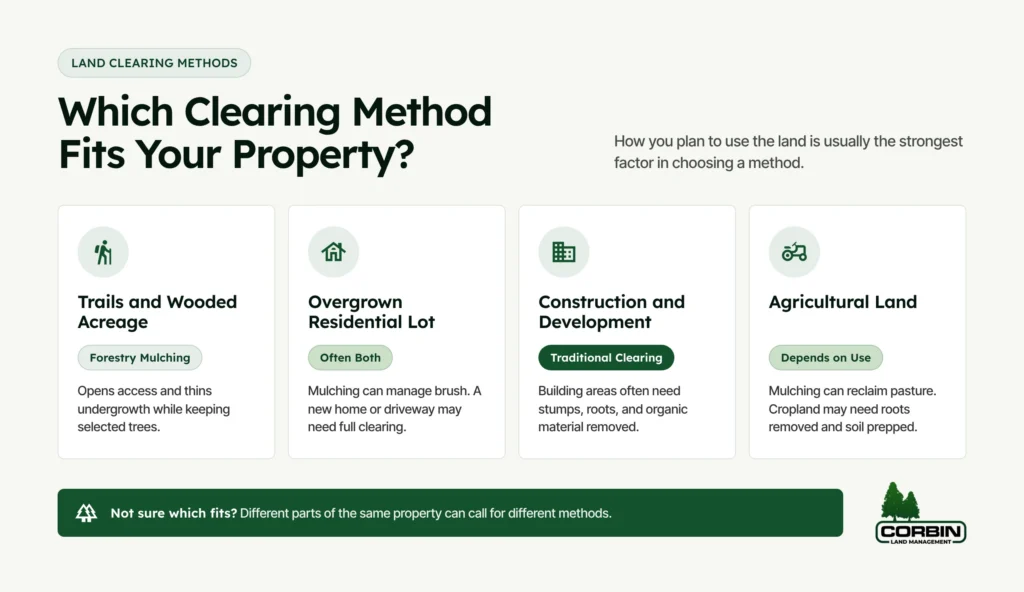
The intended use of the land is usually the strongest factor in selecting a clearing method.
Recreational Trails and Wooded Acreage
Forestry mulching is often suitable for opening trails and reducing dense undergrowth. It can improve access while preserving selected mature trees. Because extensive root removal is usually unnecessary, much of the existing ground remains undisturbed.
Overgrown Residential Lots
A residential property may need either selective vegetation management or complete clearing. Mulching can help open wooded areas and manage brush. If the owner plans to build a home, driveway, or other structure, additional clearing and grading may be necessary.
Construction and Development Sites
Development sites generally require more extensive preparation. Stumps, roots, and unsuitable organic material may need removal from building areas. Traditional land clearing and site preparation are often better suited to these requirements.
Forestry mulching may still be useful around the construction footprint where existing vegetation can remain.
Agricultural Land
Agricultural clearing depends on the intended use.
Forestry mulching may help reclaim overgrown pasture, clear fence lines, or manage brush. Land intended for cultivation may require additional root removal and soil preparation. Pasture restoration may also involve seeding and ongoing vegetation management after clearing.
Choosing the Right Land Clearing Method
Forestry mulching is often a practical choice for managing overgrowth, opening trails, and maintaining wooded property without extensive ground disturbance. Traditional clearing is generally better suited to projects requiring stump removal, grading, or preparation for construction. Some properties benefit from combining both methods.
Corbin Land Management provides forestry mulching, land clearing, tree removal, stump grinding, and grading services in Inman and surrounding Upstate South Carolina communities. The appropriate approach depends on the property’s current condition and what the owner plans to do with the land.
Contact Corbin Land Management to discuss your property and request an estimate for your clearing project.
Clear the Land. Prepare the Ground. Build With Confidence.
Whether you need to clear an overgrown lot, prepare a building site, improve access, or reshape your property, Corbin Land Management is ready to help.
Contact